


Unauthorised production ofBMWSUVs has restarted inRussiawithout the official approval or oversight of the German automaker.
BMW, like most foreign automakers, stopped production in Russia after the country invaded Ukraine in March 2022. The Bavarian brand halted imports into the country, and stopped the manufacturing of its products at the plant run by Avtotor in Kaliningrad, the Russian exclave entirely surrounded by Poland, Lithuania and the Baltic Sea.
According toKommersant, sales of locally produced BMW models nearly tripled in 2025 to 145 units. The business newspaper believes these vehicles are being produced from leftover knockdown kits that were shipped to the factory prior to BMW’s exit from the country.
Looking for your next car? We’ll help youresearchandcompareso you choose with confidence.
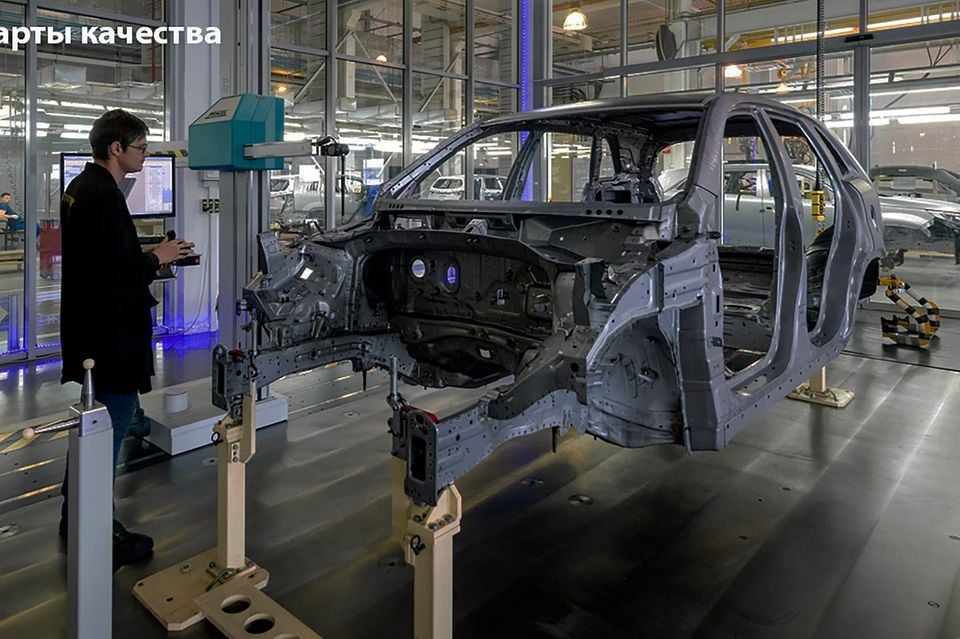
Prior to the automaker’s departure, X5, X6 and X7 models were being produced in Kaliningrad. Some of these models are now appearing on Russian websites, and are notable for having 2025 or 2026 build dates but missing out on the facelifted designs that should be present on 2025/26 models.
BMW’s representative office in Russia warned vehicles produced without its oversight and involvement posed a risk to drivers, passengers and other road users.
It also noted: “Some auto components and consumables cannot be used for production after long-term storage. Vehicle kits may have been supplemented with components purchased from third-party suppliers and not intended for the production of a specific vehicle type.”
Other local sources, includingAuto.ru, claim local parts being used include wiring harnesses and hoses.

In an email chat with Radio Free Europe/Radio Liberty (RFE/RL), Carolin Bachmann, a spokesperson for BMW, confirmed Avtotor “began producing limited batches of BMW cars in 2025, assembling vehicles from old, partially outdated kits that had remained at its disposal since the termination of cooperation in 2022″.
One Russian website, possibly linked to the Kaliningrad factory, is marketing these cars under the ’Time Machine‘ tag and lists 2026-build vehicles with a starting price of ₽11.9 million (A$220,500) for the X6 and ₽12.9 million (A$239,000) for the X7.
By comparison, a genuine 2026 X6 listed onDrom that’s been imported through the grey market, likely via China or another intermediate country, starts from ₽17.3 million (A$320,500).
Despite the price advantage the locally-made model has, sales of bootleg models were dwarfed by grey imports, withKommersantreporting total BMW sales surged by 42 per cent to 16,740 units in 2025. Just 145 of those were made in Russia.
Although there’s still a significant appetite in Russia for BMW vehicles, its unlikely Kaliningrad-made examples will capture more than a small fraction of that demand.
One logistics expert who spoke with RFE/RL estimates Avtotor has a significant supply of SUV kits on hand, but is being hampered by a slow run rate. This could be down to its need to source simple components and replacement electronic control units that bypass BMW systems.
Prior to Russia’s attempted conquest of Ukraine Avtotor held manufacturing contracts with GM, BMW, Kia and Hyundai. From 1999 to the end of 2021, Avtotor produced around 261,000 BMWs. Now the site produces vehicles for Chinese automakers, including BAIC and Jetour.
MORE: Explore the BMW showroom