


Record-high petrol and diesel prices could hit Australian motorists soon, with conflict in the Middle East threatening supply and the federal government admitting current fuel stocks remain below international benchmark levels.
While the NRMA yesterday told News.com.au that fuel prices could lift by around 10 per cent in seven to 10 days, Compare the Market is forecasting a much higher price spike and says benchmark oil prices have already increased by around 20 per cent since January, when the ABC reported that Australia’s petrol stocks had fallen to 22 days.
“In an extreme event, a 30 per cent increase in fuel prices from where they are currently could push the price of unleaded 91 past $2.50 a litre in some regions,” said Compare the Market spokesperson Chris Ford.
That extreme event may be approaching, with the war in the Middle East causing global uncertainty as events unfold.
CarExpert can save you thousands on a new car. Clickhereto get a great deal.
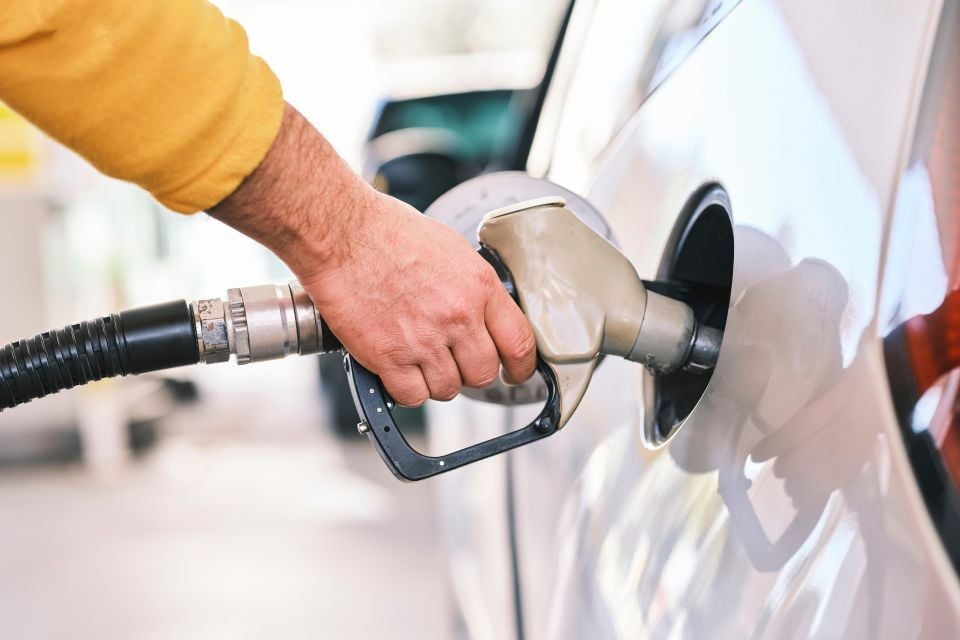
“In that scenario, it would cost $125 to fill up a 50-litre tank,” Mr Ford said.
The latest figures from the Australian Institute of Petroleum (AIP) showed a national average service station price of 172.9c/L for 91-octane unleaded petrol in the week ending February 22, 2026.
The fuel tank in Australia’s most popular petrol model – the Toyota RAV4 hybrid – is 55 litres, which would cost $95.10 to fill at the most recent national average.
The AIP’s high of 193.5c/L in the Northern Territory (NT) pushes that figure to $106.43, while the low average of 169.6c/L in Tasmania would reduce the cost to $93.28.

The most popular dual-cab versions of Australia’s best-selling vehicle for the past three years, the predominantly diesel-powered Ford Ranger, has an 80-litre tank.
Using the AIP average diesel price of 180.3c/L for the week ending February 22, 2026, it would cost $144.24 to fill the Ranger’s tank. But Mr Ford said those prices could soon soar.
“We could see new record-breaking prices at Australian bowsers if the oil price continues to surge as predicted,” he said yesterday.
“Benchmark oil prices have already climbed to their highest level since June last year – up around 20 per cent since the start of January. Some forecasters believe prices could climb to $US100 ($A142) a barrel.
“Following air strikes in the Middle East, the price of Brent crude increased 13 per cent in early trading to $US82 ($A116) a barrel, the highest level in 14 months.
“Compare the Market analysis shows a 10 per cent increase based on current city-wide averages would see the price of unleaded 91 rise well above $2/L in many capitals.
“The last time we saw such high prices was in April 2024, when the national average for unleaded 91 exceeded $2.18/L and city-wide averages surpassed $2.30/L in some capitals. At the time, the national wholesale average price was $1.87/L.”
As supply concerns push up prices, national fuel security has again come under scrutiny, particularly following earlier modelling of a potential blockade of the Strait of Hormuz – a key shipping corridor in the Persian Gulf.
Yesterday (March 2), a senior official in the Islamic Revolutionary Guard Corps (IRGC) officially confirmed the Strait was closed, subsequently threatening any ship that passed through it.
Around 20 per cent of the world’s traded oil passes through the Strait to countries including China and Japan, and any disruption would place pressure on fuel supplies and prices globally.
Iran, which was bombed by the US on February 28, produces around 4.5 per cent of global daily oil supply and is a member of OPEC (Organization of the Petroleum Exporting Countries).
In federal parliament yesterday, Minister for Climate Change and Energy Chris Bowen said Australia’s current fuel supplies stood at 36 days for petrol, 34 days for diesel, and 32 days for jet fuel.
Despite Mr Bowen saying these levels are the highest in 15 years, they fall well short of the International Energy Agency’s (IEA) requirement for member countries to hold oil stocks equivalent to at least 90 days of net imports.
When questioned by One Nation MP Barnaby Joyce on whether the quoted stocks were physically on Australian soil, Mr Bowen responded that the fuel was either already in the country “or on ships in our exclusive economic zone” – an area extending up to 370km offshore.
“It is not all on land in Australia, but it includes fuel that is on the way to Australia and is in our economic zone. It does not include ships some way away, whether in the Middle East, Singapore or the Gulf of Mexico,” said Mr Bowen.
MORE: Almost 80 per cent of cars tested in the real world overstate their fuel economy