


Like almost every automaker,Mercedes-Benzhas embraced ever-larger screens and an ever-reducing roster of physical buttons, but its CEO is now willing to admit it might have gone a little too far.
In an interview withAutocar, Mercedes-Benz CEO Ola Källenius was asked about criticism regarding more and more vehicle controls being moved from physical buttons, dials and switches to the touchscreen.
The CEO said the company spends “countless hours” on user interface development, and quipped that he himself spends “hours every year discussing [the interface] with our engineers and we joke it needs to be so easy that either a five-year old kid or a Mercedes board member can use it”.
He went on to say that with familiarity it “becomes second nature” and noted the vast improvement in voice control systems.
Mr Källenius did concede, though, the “industry as a whole might have gone a little bit too far” with on-screen controls, and that “sometimes you get a bit ahead of yourself and do technology for the sake of technology and maybe forget a little bit about the customer”.
He then promised “from now on, you will see us reintroduce the most sensible buttons”.

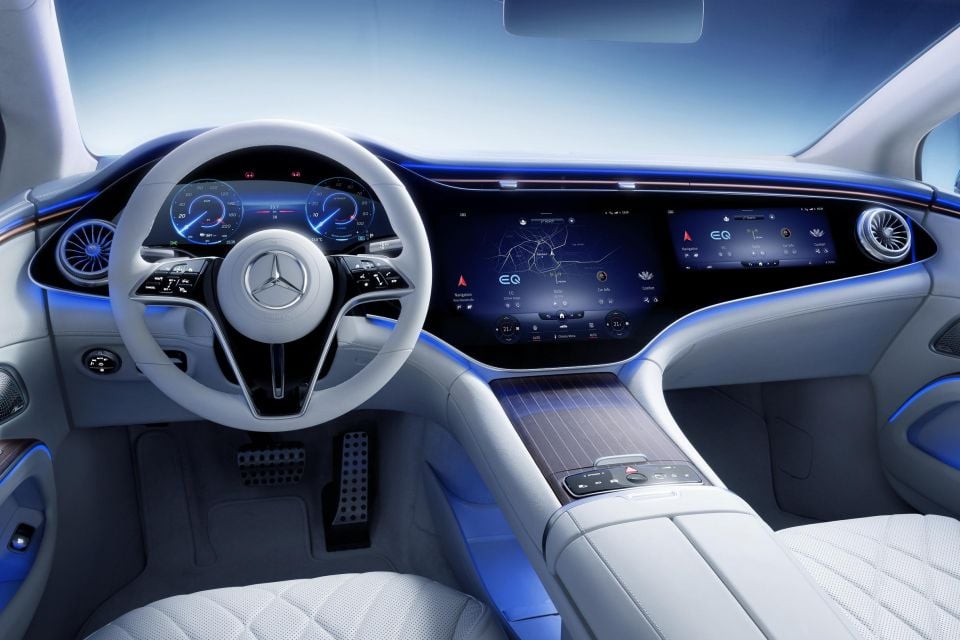
The latest generation Mercedes-Benz vehicles are available with a dashboard-spanning three-screen setup known as MBUX Hyperscreen or MBUX Superscreen depending on the model.
Launched in 2021 as an option of the EQS luxury sedan, these setups feature a digital instrumentation screen, a large central touchscreen, and an another touchscreen ahead of the front passenger.
A similar setup has now filtered all the way down to the company’s entry-level sedan, the CLA “four-door coupe”. Most functions, including the air conditioning, are controlled from the touchscreen, although some things can be adjusted by capacitive buttons that live on the steering wheel and in a strip in the centre console.
Physical switches are basically limited to those operating the electric seats and windows, the stalks behind the steering wheel, and the odd scroll wheel.